

How to Choose the Right Home Heating and Cooling Upgrades for Your NeedsTable of Contents
- Why a Heating and Cooling Upgrade Takes Careful Planning
- Signs That a Home Is Ready for an Upgrade
- Start With the Home, Not the Equipment
- Compare Heating and Cooling System Options
- Check Sizing, Airflow, and Ductwork
- Review Energy Use and Long-Term Costs
- Choose a Qualified HVAC Professional
- Build a Practical Upgrade Timeline
- Common Planning Mistakes to Avoid
- Final Checklist for Homeowners
A heating and cooling upgrade is a major home decision, not just an equipment purchase. The right plan considers comfort, energy use, indoor air quality, noise, repair history, home layout, and the needs of everyone in the household. Whether you are considering a conventional replacement or researching universal split systems, starting with a clear process can help you avoid rushed choices when your current system stops working.
There is no single best HVAC solution for every property. A system that works well in one home may be a poor fit for another because climate, insulation levels, ducts, electrical capacity, fuel choices, room use, and budget can all affect the outcome. Careful planning gives you more time to compare options and address problems that new equipment alone may not fix.
Why A Heating And Cooling Upgrade Takes Careful Planning
Heating and cooling equipment affects far more than the temperature displayed on a thermostat. It can influence how evenly rooms feel, how much humidity is removed during cooling season, how much noise reaches living areas, and how often repairs are needed. Planning before an emergency replacement also lets you compare estimates, review available equipment, and decide whether related improvements should be completed at the same time.
Signs That A Home Is Ready For An Upgrade
Age is only one part of the decision. A system may deserve closer attention if it needs frequent repairs, has difficulty maintaining comfort during severe weather, produces unusual sounds, delivers weak airflow, or leaves some rooms noticeably warmer or cooler than others. Rising utility use can also be worth investigating, especially if household habits have not changed.
- Does the system struggle on the hottest or coldest days?
- Are certain rooms consistently uncomfortable?
- Have repair visits become more frequent or more costly?
- Are replacement parts or controls difficult to find?
- Has the home been renovated, expanded, or used differently since installation?
Before selecting a new unit, look at the house that unit must serve. Attic insulation, air leaks, windows, duct condition, return-air pathways, blocked registers, and room layout can all influence comfort. For example, a home with inadequate attic insulation may still feel uncomfortable after a new system is installed because heat can continue moving through the ceiling area.
A home energy assessment or a detailed contractor inspection can identify practical improvements, such as sealing accessible duct leaks, adding weatherstripping, clearing vents, or correcting return-air restrictions. The planning considerations for an existing HVAC upgrade also emphasize evaluating the distribution system, power needs, airflow, and compatibility before expanding or replacing equipment.
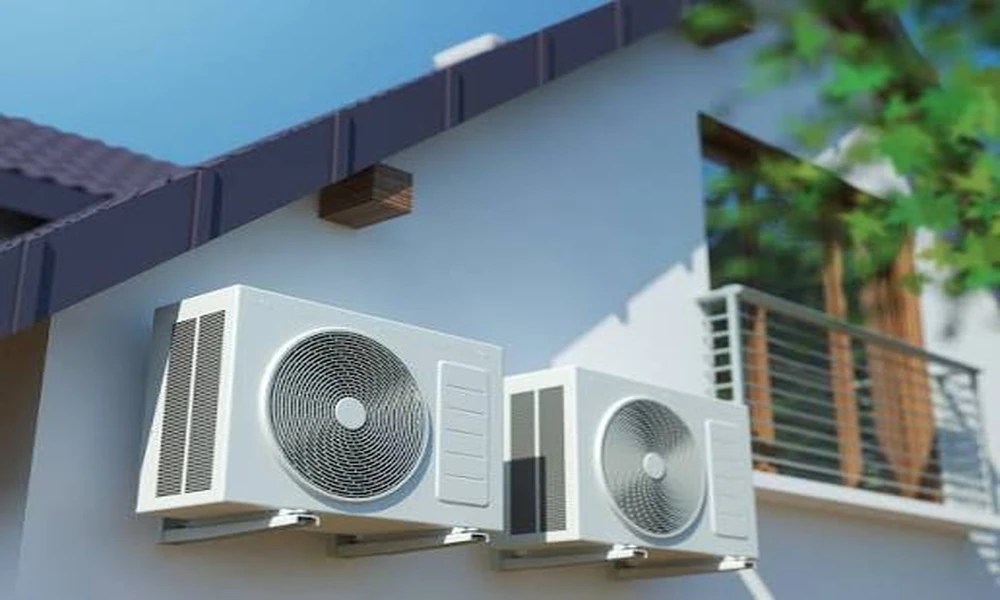
Photorealistic wide establishing shot of a comfortable suburban home in its broader neighborhood setting, with a visible outdoor HVAC unit, roofline, windows, and surrounding yard, conveying whole-home heating and cooling planning, natural daylight, realistic residential scale, no text or people in close-up.
Compare Heating And Cooling System Options
Compare system categories based on how they fit the home rather than assuming that one technology is automatically right for every situation.
Questions To Guide The Comparison
- Central ducted systems: Can be practical when ducts are in good condition and reach the rooms that need conditioning.
- Ductless systems: May be useful for additions, converted spaces, or areas where extending ducts would be difficult.
- Heat pumps: Provide heating and cooling, but the best configuration depends on local temperatures, electrical capacity, and any desired backup heat.
- Packaged systems: Combine major components in one outdoor cabinet and may suit certain home layouts.
- Hybrid setups: Can combine different equipment or fuel sources when household needs and climate conditions support that approach.
Consider available space indoors and outdoors, existing ductwork, local utility costs, room-by-room control preferences, and backup heating needs. Efficiency ratings matter, but proper design and installation remain essential.
Check Sizing, Airflow, And Ductwork
Equipment should be selected using a current load calculation rather than simply matching the capacity of the old unit. An oversized system can cycle on and off too often, while an undersized system may run for long periods without meeting the desired indoor temperature. Both situations can create comfort concerns.
Ask each contractor how the size was calculated and whether the duct system will be inspected or tested. Supply registers, return grilles, duct leakage, room pressure, and balancing can affect performance as much as the equipment itself. Useful questions include:
- How was the recommended capacity determined?
- Will existing ducts and returns be evaluated?
- Are any rooms lacking a suitable return-air path?
- Would dampers, zoning, or duct changes improve comfort?
Review Energy Use And Long-Term Costs
Look beyond the purchase price. The full cost of ownership can include installation labor, electrical work, permits, filters, maintenance, repair exposure, fuel or electricity use, controls, and the expected service life of the equipment. Request itemized estimates so you can see what is included and make a more meaningful comparison between proposals.
Incentives can help, but eligibility may depend on the equipment, installation date, utility territory, household circumstances, and program requirements. Confirm requirements before signing a contract, and ask whether the planned system will require an electrical-panel upgrade or other electrical work.
Choose A Qualified HVAC Professional
When time allows, obtain two or three detailed estimates from properly licensed and insured professionals. A careful contractor should inspect the home, explain recommendations in plain language, provide equipment model information, discuss warranties and maintenance, and explain who will handle permits. Be cautious when a recommendation is made without examining the home or when you are pressured to sign immediately.
Build A Practical Upgrade Timeline
- Six to twelve months ahead: Track repairs, comfort complaints, utility use, and system performance.
- Three to six months ahead: Schedule inspections, compare equipment types, and review incentive requirements.
- One to three months ahead: Select a contractor, confirm the written scope, and address permits or electrical needs.
- Before installation: Clear access to equipment, protect nearby furniture, and confirm the schedule.
- After installation: Test comfort in every room, learn the controls, retain documents, and arrange routine maintenance.
Common Planning Mistakes To Avoid
- Choosing only by the lowest upfront quote.
- Replacing equipment with the same size without reassessing the home.
- Ignoring insulation gaps, duct leaks, or airflow restrictions.
- Waiting for a complete breakdown before researching options.
- Assuming every rebate applies without confirming eligibility.
- Overlooking permit, electrical, warranty, and maintenance details.
Final Checklist For Homeowners
A successful upgrade starts with a plan that fits both the home and the household budget. Identify the comfort problems, assess insulation and airflow, compare suitable equipment types, request a proper sizing calculation, and review long-term ownership costs. Confirm incentives, permits, and electrical requirements before work begins, then compare written estimates from qualified professionals.
For a broader approach, the whole-home efficiency improvements outlined by ENERGY STAR can help homeowners consider heating and cooling alongside insulation, sealing, controls, and future electrical needs. Taking those steps before an emergency occurs can lead to a more comfortable, practical, and durable result.
