

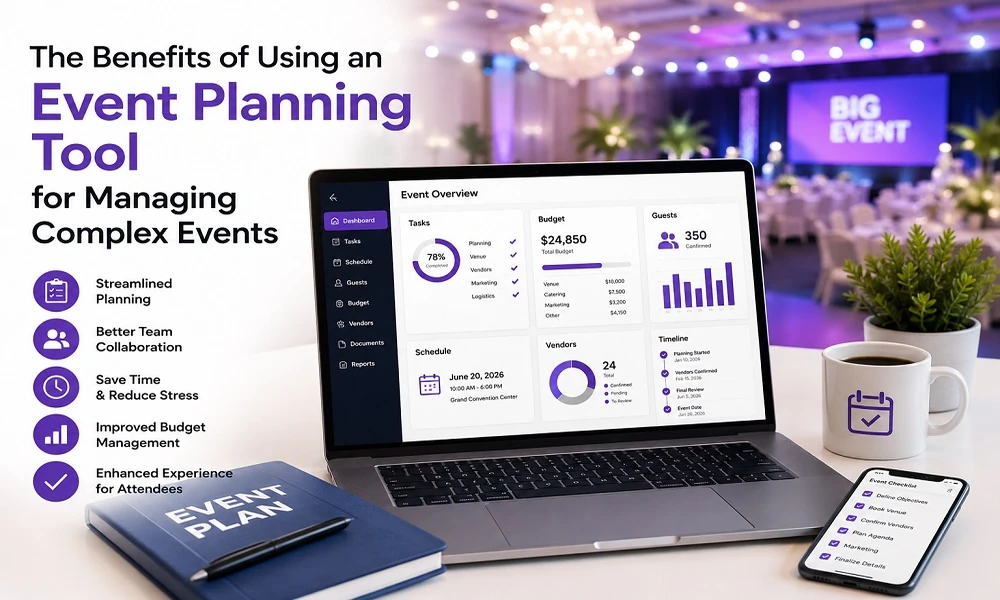
Planning an event often involves balancing numerous responsibilities at the same time. Budgets must be monitored, schedules coordinated, vendors managed, attendees communicated with, venues organised, and countless details tracked throughout the planning process. While small gatherings may be manageable with spreadsheets and manual checklists, larger or more complex events can quickly become difficult to coordinate without the right systems in place. As a result, many organisations are turning to an event planning tool to help manage the growing demands of modern event management.
Complex events present unique challenges because they involve multiple moving parts that must work together seamlessly. Conferences, exhibitions, fundraising galas, corporate meetings, festivals, training programmes, community events, and large-scale celebrations often require coordination between numerous stakeholders. Organisers must maintain visibility across all aspects of the event while ensuring that deadlines are met and resources are allocated effectively.
An event planning tool helps address these challenges by providing a centralised platform for organising information, tracking progress, and coordinating activities. Rather than relying on disconnected systems and manual processes, event teams can manage key tasks from a single location. This approach offers several important benefits that contribute to more efficient planning and successful event execution.
One of the most significant advantages is improved organisation. Complex events generate large amounts of information, including contracts, schedules, attendee details, vendor communications, budget data, floor plans, staffing assignments, and operational requirements. Keeping this information organised can become increasingly difficult as an event grows in size and complexity.
An event planning tool centralises information in a structured environment, making it easier to access and update critical details. Team members can quickly locate documents, review schedules, and monitor progress without searching through multiple email chains, spreadsheets, or paper files. Better organisation helps reduce confusion and supports more efficient decision-making throughout the planning process.
Project visibility is another major benefit. Event organisers often manage dozens or even hundreds of individual tasks simultaneously. Without a clear overview of progress, it can be difficult to identify potential issues before they affect the event.
A well-designed event planning tool provides visibility into project status, allowing teams to track completed tasks, monitor upcoming deadlines, and identify outstanding responsibilities. This transparency helps ensure that important activities remain on schedule and reduces the likelihood of critical details being overlooked.
Deadline management becomes especially important when coordinating complex events. Many planning activities depend on other tasks being completed first. Vendor contracts may need to be finalised before equipment can be ordered, venue arrangements may influence floor plans, and attendee communications may depend on programme details being confirmed.
Missing a single deadline can create a ripple effect that affects multiple aspects of the event. An event planning tool helps manage these dependencies by tracking timelines and providing reminders for upcoming milestones. This structured approach reduces the risk of delays and supports more effective project management.
Collaboration is another area where digital planning tools provide significant value. Complex events often involve multiple departments, external suppliers, contractors, volunteers, sponsors, and stakeholders. Ensuring that everyone remains informed and aligned can be challenging when communication is managed through fragmented systems.
An event planning tool provides a shared workspace where team members can access information, update progress, and communicate more effectively. Having a central source of information reduces misunderstandings and helps ensure that all participants are working from the same set of plans and priorities.
Communication efficiency improves considerably as well. Event organisers frequently spend substantial amounts of time exchanging updates, answering questions, and distributing information. As the number of stakeholders increases, communication management can become a significant administrative burden.
Many event planning tools include features that streamline communication and reduce the need for repetitive manual updates. Shared dashboards, automated notifications, and centralised information repositories help keep everyone informed while reducing the volume of administrative work required.
Budget management is another critical aspect of complex event planning. Events often involve numerous expenses, including venue costs, catering, technology, entertainment, staffing, transportation, marketing, and equipment. Monitoring these expenditures manually can be time-consuming and may increase the risk of budget overruns.
An event planning tool helps organisers track financial information more effectively by centralising budget data and providing visibility into spending. Real-time monitoring supports better financial control and allows planners to identify potential issues before they become significant problems.
Vendor coordination can also become much easier with the support of dedicated planning software. Large events often depend on multiple vendors delivering products and services according to specific timelines. Coordinating contracts, schedules, payments, and requirements across numerous suppliers can be a complex undertaking.
An event planning tool helps organisers maintain oversight of vendor relationships by tracking key information and deadlines. Having vendor details organised in one place reduces administrative effort while improving accountability throughout the planning process.
Risk management is another area where planning tools provide meaningful advantages. Every event carries some level of risk, whether related to logistics, staffing, safety, technology, weather, or operational challenges. Identifying and addressing these risks requires careful planning and ongoing monitoring.
Digital planning systems help teams document potential risks, assign responsibilities, track mitigation measures, and monitor progress. This structured approach supports more proactive risk management and improves preparedness for unexpected situations.
Resource allocation becomes more efficient as well. Complex events often involve managing staff, volunteers, equipment, facilities, and other resources across multiple activities. Without clear visibility into resource availability, scheduling conflicts and inefficiencies may occur.
An event planning tool helps organisers coordinate resources more effectively by providing a central overview of assignments and requirements. Improved visibility supports better utilisation of available resources and helps prevent unnecessary duplication or shortages.
Attendee management is another important benefit. Registration data, attendance tracking, communication records, and participant information all contribute to the overall event experience. Managing these details manually can become increasingly difficult as attendance grows.
Many planning platforms integrate attendee management functions directly into the event planning process. This integration simplifies administration while helping organisers provide more consistent and responsive support to participants.
Reporting capabilities add further value. Understanding how planning activities are progressing and evaluating event performance can help organisations improve future events. Collecting and analysing information manually often requires significant effort and may limit the availability of actionable insights.
An event planning tool can generate reports that provide visibility into budgets, timelines, registration activity, resource allocation, and other key metrics. These insights support informed decision-making and continuous improvement.
Scalability is another important consideration. As events become larger or more complex, manual planning methods often struggle to keep pace. What works for a small meeting may not be suitable for a multi-day conference, festival, or large-scale corporate event.
An event planning tool provides a framework that can adapt to varying levels of complexity. Whether managing a modest gathering or a major event involving multiple stakeholders and thousands of attendees, the system remains capable of supporting planning activities efficiently.
Perhaps one of the greatest benefits is peace of mind. Complex events involve countless details, and organisers often face significant pressure to ensure everything runs smoothly. Having a structured system that provides visibility, organisation, and control can reduce stress while improving confidence throughout the planning process.
Rather than relying on memory, scattered notes, or disconnected spreadsheets, event teams can work within a comprehensive environment designed specifically for event management. This level of control supports better outcomes and allows organisers to focus on delivering exceptional experiences.
As events continue to grow in scale and complexity, the demand for efficient planning solutions is likely to increase. Organisations are recognising that successful event management depends not only on creativity and coordination but also on having the right tools to support those efforts.
An event planning tool offers practical advantages that help teams manage complexity more effectively. From organisation and collaboration to budgeting, communication, resource management, and risk mitigation, these platforms provide valuable support throughout the planning journey. By streamlining processes and improving visibility, they help event professionals deliver successful events while reducing administrative burdens and operational challenges.
