

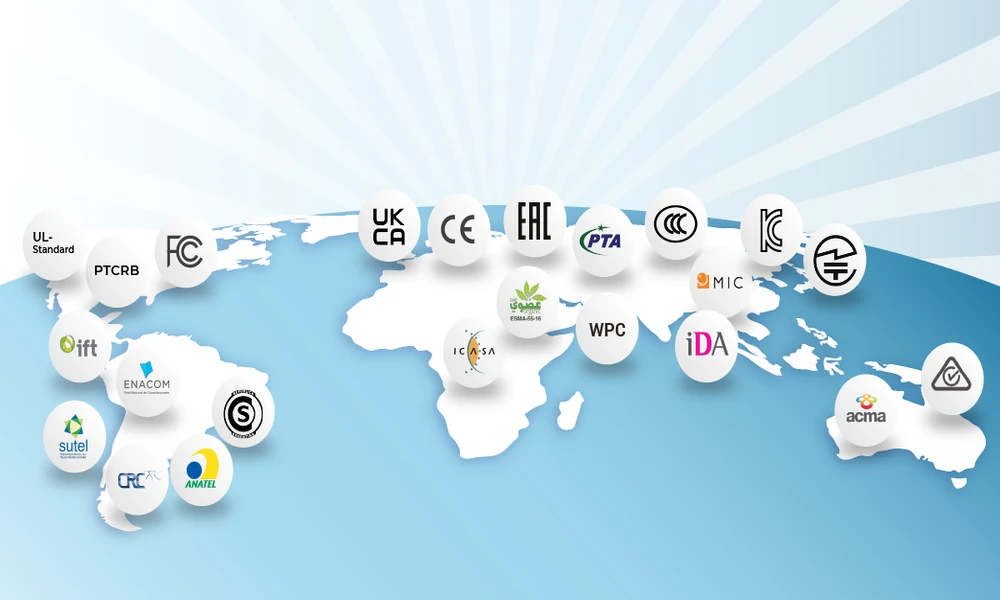
When a wireless device hits the market, trust is rarely the first thing that comes to mind. Yet behind every smartphone, car sensor, or smart thermostat sits a rigorous gauntlet of testing and certification that quietly keeps global markets humming. Wireless device certification is not just a bureaucratic checkpoint; it is a powerful force that shapes regulatory markets, drives innovation, and sets the stage for how technology reaches users worldwide.
The Rising Importance of Wireless Device Certification in a Global Market
Wireless devices are now everywhere, embedded in everything from industrial robots to fitness trackers. This explosion of connected products brings risks of interference, safety lapses, and incompatible standards. Certification is no longer a box-ticking exercise. For manufacturers, it is the ticket to global markets and a critical shield against recalls and regulatory setbacks.
How Certification Drives Regulatory Compliance and Market Access
Certification is about more than just compliance; it is about readiness for international competition. Each market, be it the United States, Europe, or Canada, demands strict proof that wireless devices meet electromagnetic compatibility (EMC) and radio frequency (RF) requirements. Without certification, even the most innovative device can be dead on arrival, locked out by customs or blocked by regulatory agencies.
Key Stakeholders: Manufacturers, Regulators, and Testing Labs
Manufacturers may design the devices, but regulators set the rules and accredited labs provide the unbiased verification. The dynamic is complex and collaborative. Accredited labs act as translators between technical innovation and legal compliance, navigating evolving standards and ensuring that products can make it past regulatory checkpoints worldwide.
Case Study: Navigating Certification for a Canadian Wireless Device
Every certification journey is a mixture of anticipation, technical rigor, and sometimes, frustration. Take the case of a Canadian electronics startup aiming to introduce a new wireless device to North American and European markets.
Pre-Compliance Testing: Identifying Issues Early
The first step is pre-compliance testing. Here, engineers look for potential failure points in emissions or susceptibility, allowing problems to be corrected before expensive full compliance tests begin. Catching issues early can save months in development and thousands of dollars in retesting.
EMC and RF Testing: Meeting ISO/IEC 17025 Standards
Once confident, the device heads for formal testing. Accredited labs, such as Stancer Testing-Lab, operate under ISO/IEC 17025 standards. This international benchmark guarantees the credibility of test procedures and results, a prerequisite for regulatory acceptance in major markets.
Achieving FCC and ISED Certification: The Process and Challenges
For the US, FCC certification is mandatory, while Canada requires ISED approval. Each process involves detailed documentation, lab measurements of emissions and immunity, and sometimes, troubleshooting and retesting when devices fail to meet the mark. Delays can occur if specifications are unclear or if regional interpretations of standards diverge.
Harmonizing Regulatory Standards Across Regions
One of the biggest hurdles for global manufacturers is the patchwork of regional requirements. While there is overlap, differences remain in how regions approach EMC and RF compliance.
| Region | Regulatory Body | Mark/Standard | Notable Requirement |
|————-|—————-|——————–|——————————————|
| USA | FCC | FCC Part 15 | Emission limits, equipment authorization |
| Canada | ISED | RSS Series | Similar to FCC, additional labeling |
| Europe | ETSI, EU | CE Marking RED | EMC directive, radio equipment directive |
The Role of International Standards like ETSI and CE Marking
International standards like those from ETSI (Europe) and the CE Mark open doors for cross-border trade by harmonizing expectations. They allow manufacturers to test once and sell nearly everywhere, but gaps still exist that require careful navigation.
How Labs Facilitate Cross-Border Market Entry
Accredited labs do more than test; they consult, strategize, and support manufacturers in interpreting diverse requirements. Their global recognition fast-tracks entry into foreign markets, reducing duplication and delays.
The Technical Backbone: EMC and RF Testing Explained
Certification would be impossible without robust, science-driven testing. EMC and RF evaluations ensure devices neither emit harmful interference nor easily fall victim to it.
Radiated and Conducted Emissions Testing in Practice
Products are assessed for both radiated (through the air) and conducted (via wires) emissions. Sensitive antennas and instruments capture emissions across a wide spectrum to confirm compliance with mandated limits.
Immunity Testing and Its Impact on Device Reliability
Immunity testing measures how well a device can function amid electrical noise, static discharges, or radio bursts. A device that passes is less likely to malfunction in real-world environments.
Advanced RF Testing: From Transmitter Characterization to OTA Performance
Modern labs also perform advanced RF testing, characterizing transmitter power, assessing over-the-air (OTA) performance, and ensuring safe RF exposure levels. This is particularly crucial as devices connect across more frequencies and networks.
Impact on Industries: From Automotive to Telecommunications
Certification is not one-size-fits-all. Every industry faces distinct standards and real-world risks.
– Automotive: Vehicles must pass CISPR 12 and ECE Regulation 10, ensuring that wireless tech does not disrupt safety systems.
– Telecommunications: Standards like ETSI EN 301 489 ensure that network equipment coexists peacefully on crowded airwaves.
– Robotics and Lighting: Each has its own standards, from CISPR 11 to IEC 61000, tailored to their application environment.
Real-world success stories abound, from certified smart grid devices in Europe to next-generation telecom equipment approved for US deployment. Certification drives improvements not just in compliance, but in innovation and product design itself.
The Business Case: Why Certification Labs are Strategic Partners
A good lab is more than a technician behind a meter. Strategic partners like accredited labs guide companies through complex requirements, reducing time to market and helping them avoid costly setbacks.
– Efficient Testing and Consulting: Integrated compliance support streamlines the process, from test plan to submission.
– Early Compliance Verification: Detecting issues early means fewer redesigns and faster launches.
– Trust and Reputation: Certified products signal quality and reliability to both regulators and customers.
Emerging Trends and Future Outlook
Wireless technologies are evolving fast. Devices are becoming more complex, and standards are shifting to keep pace with new risks.
– Automation and Data Analytics: Digital transformation is making testing faster and more accurate.
– Regulatory Changes: Manufacturers need partners who can anticipate and prepare for evolving standards.
Conclusion: Certification as a Catalyst for Global Wireless Innovation
Wireless device certification sits at the crossroads of technology, regulation, and trust. By weaving together robust testing, harmonized standards, and strategic partnerships, certification is not just a regulatory hurdle, it is the catalyst that brings innovation safely to markets around the globe.
