

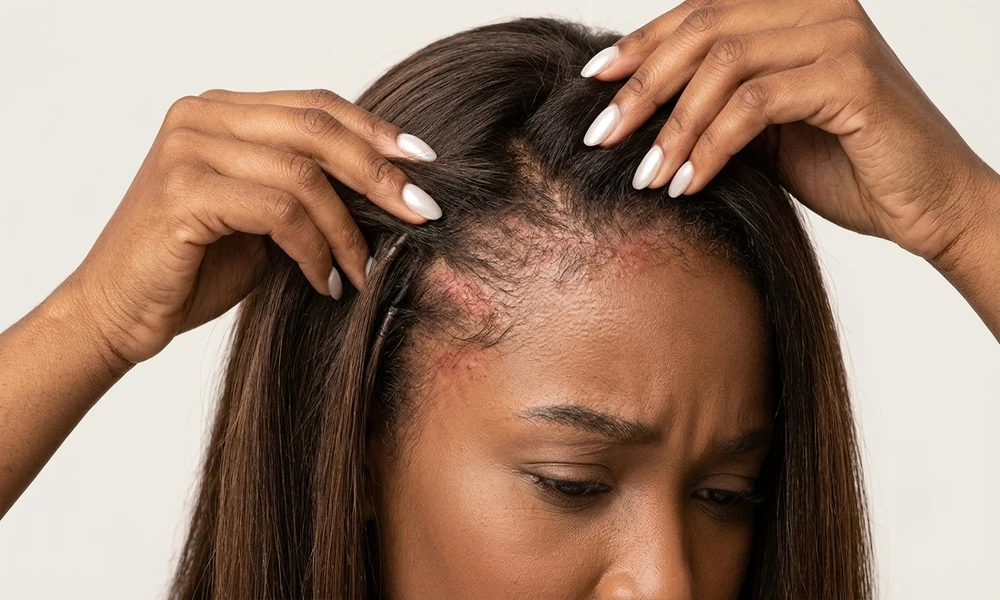
A smooth, polished install can make your everyday beauty routine feel easier, especially when you want a style that looks natural, moves beautifully, and helps reduce constant heat styling on your own hair. But even the prettiest sew-in or bundle install should never come at the cost of your edges, scalp comfort, or long-term hair health. Many women are told that tightness means the style is “secure,” but pain is not proof of quality. It is often your scalp’s way of saying something is wrong. When your hairline feels sore, itchy, bumpy, or looks thinner after an install, it is important to pay attention early. The goal is not to fear extensions, but to wear them wisely, choose gentle installation methods, and protect the fragile hair around your temples and edges.
Early Signs Your Hairline Is Under Too Much Stress
Textured and natural hair can be delicate around the front hairline, especially when it has been relaxed, color-treated, heat-styled, or frequently manipulated. When wearingRelaxed Straight Hair Bundles, the install should feel comfortable, secure, and easy to live with. It should not feel like your scalp is being pulled every time you smile, sleep, or style your hair.
One of the first warning signs is tenderness around the edges or temples. A little awareness of a fresh style may happen, but sharp pulling, throbbing, or soreness that lasts more than a day should not be ignored. Small bumps, redness, flakes caused by irritation, or a burning feeling can mean the braid base or stitching is placing too much pressure on the scalp.
- Pain or tightness around the front hairline
- Small bumps, redness, or scalp soreness
- Headaches after installation
- Breakage near the temples or leave-out area
- Edges that look thinner after each takedown
Normal Fresh Install Feeling vs. Real Hairline Damage
A new sew-in may feel slightly snug during the first day because the braids, thread, and wefts are newly placed. However, “snug” should never mean painful. You should still be able to move your face comfortably, sleep without discomfort, and touch your scalp without wincing. If you feel constant pulling, that is not normal adjustment.
Natural and textured hair needs room to breathe underneath any protective style, especially when the front section is relaxed or more fragile than the rest of the head. Even high-qualityStraight Hair Extensions can create problems if the install is too tight, too heavy, or styled in a way that keeps dragging the hairline backward.
The biggest difference between normal tightness and damage is how your scalp reacts over time. If the discomfort fades quickly and the scalp looks calm, the install may simply be settling. But if the pain continues, bumps appear, or you notice shedding around the edges, it is time to loosen, adjust, or remove the style.
Common Reasons Installed Bundles Can Hurt Your Edges
Hairline stress often starts with the braid foundation. If the cornrows are braided too tightly, the scalp is already under pressure before the wefts are even sewn in. Once thread and hair are added, that tension increases. This can be especially risky near the temples, where the hair is usually finer and more vulnerable to breakage.
Another issue is weight. Long, dense, or multiple bundles can look beautiful, but if the install is too heavy for your natural hair density, the pulling can weaken the roots. A professional stylist should consider your hair thickness, scalp sensitivity, and the condition of your edges before deciding how much hair to install.
Leave-out can also become a problem when it is flat-ironed too often to blend. Relaxed or heat-trained hair may already be more prone to dryness, so daily pressing can lead to snapping around the part, crown, or front hairline. The install may look smooth, but the natural hair being blended may quietly suffer.
How to Protect Your Hairline While Wearing a Sew-In
The best way to protect your edges is to choose a low-tension install from the beginning. Speak up during your appointment if the braids feel too tight. A good stylist will adjust the tension instead of telling you to “wait it out.” Your comfort matters, and pain should never be treated as part of the process.
Avoid styles that pull the installed hair into tight ponytails, buns, or half-up looks too often. Even if the sew-in itself was installed properly, repeated pulling can create traction around the front. Wear the hair down, loosely pinned, or styled in soft layers when possible.
- Ask for gentle braiding around the perimeter
- Avoid heavy installs if your edges are already thin
- Keep ponytails and buns loose
- Moisturize your natural hair underneath the install
- Clean your scalp so buildup does not cause itching or inflammation
- Use less heat on leave-out or choose a closure when needed
It is also important not to keep the style in too long. Leaving an install in past its healthy window can lead to matting, dryness, trapped buildup, and extra shedding during removal. If your scalp is irritated or your edges feel weaker, do not wait for the style to “get old” before taking action.
Final Thoughts on Hair Health
A beautiful install should make you feel confident, not worried about losing your edges. If your scalp hurts, your temples are thinning, or your hairline looks more fragile after each takedown, those are signs your routine needs to change. Healthy styling means listening to your scalp before the damage becomes harder to reverse.
The best hair choices are the ones that support both beauty and protection. Choose lightweight installs, gentle braid patterns, careful blending methods, and regular scalp care. Your hairline deserves the same attention as the finished style, because true confidence comes from knowing your natural hair is being protected underneath.
