

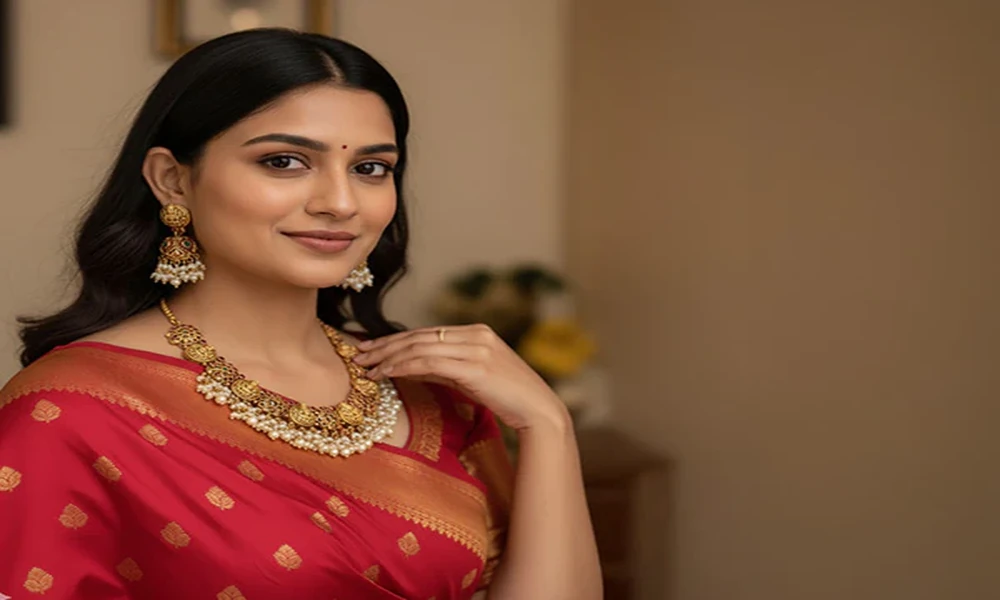
In many Hindu homes, the small mandir in a corner of the house gets more attention before a festival than any other room. Brass lamps are polished, fresh flowers arrive and the idols are dressed in their finest ornaments. A tiny crown for Krishna, a necklace for Lakshmi, a waistband for Ganesha: these pieces are often antique temple jewellery passed down through two or three generations, each with a story attached.
Choosing new pieces, using them through daily worship and keeping them bright for years takes a little knowledge. Silver behaves differently from gold, finishes vary a great deal and buying from a screen brings its own questions. A few practical points help families make choices they will be happy with for a long time.
What Makes Jewellery for a Deity Different from Jewellery People Wear?
The first difference is scale. Ornaments for an idol are sized to its height and shape, so a crown for a small brass Balaji will look nothing like one made for a large marble figure in a family temple. Shops often sell these pieces as temple jewellery for god idols of particular heights, and many families measure the idol carefully, from the crown of the head to the base, before ordering anything.
The second difference is purpose. These ornaments are offered to the deity and are not meant for anyone to wear. Many families think of them as divine jewellery, kept apart from personal jewellery boxes and handled with clean hands during worship. Crowns, necklaces, earrings, armlets, waistbands, anklets and small flutes or weapons all form part of a full set, though most households build their collection slowly over the years.
Why Do So Many Families Prefer Silver for Pooja Ornaments?
Silver has long been considered pure and auspicious in Hindu tradition, and it sits comfortably between brass and gold in cost. It takes fine detail well, so artisans can carve delicate peacock motifs, lotus petals and tiny bells into even the smallest crown. That is a big part of why silver temple jewellery has stayed popular through changing fashions. Across the many regional styles of temple jewellery in India, from Tamil Nadu and Kerala work to the heavier northern designs, silver remains the metal most households start with.
Silver also pairs naturally with other pooja items in the same metal. Plates, diyas, kalash pots, bells and small bowls in silver give the home shrine a matching look, and many families add one piece at each festival or family milestone.
Antique Finish, Plain Polish or Rhodium Plating: Which Lasts Better?
Finish changes both the look and the care routine. An antique finish is created by deliberately darkening the recesses of the design, so the raised parts shine while the grooves stay deep grey. This gives antique temple jewellery the warm, aged look many people associate with temple art. Because the darkness is part of the design, harsh polishing can remove it and flatten the detail.
Plain polished silver looks bright and white when new, but it reacts with sulphur compounds in the air and slowly forms a dark tarnish. Kitchen fumes, humid weather and even some rubber bands speed this up. Regular gentle cleaning keeps it bright.
Rhodium-plated silver jewellery carries a very thin layer of rhodium, a hard, white metal from the platinum group, over the silver. The coating resists tarnish and gives a bright, mirror-like shine that stays fresh for longer. It does wear with rubbing over time, especially on raised edges, and a jeweller can replate the piece when the silver underneath starts to show.
Does Silver Pooja Jewellery Carry a BIS Hallmark?
Hallmarking for silver in India has been voluntary since 2005, and it is still optional as of November 2026, though officials have said they are studying a move to a mandatory system. Since 1 September 2025, silver hallmarked under the Bureau of Indian Standards scheme carries a six-character HUID code along with the BIS mark and a purity grade such as 925 or 999. The details behind a HUID can be checked through the BIS Care app.
Because hallmarking is optional, plenty of genuine silver pieces carry no hallmark at all, particularly older family items and small handmade ornaments. Asking for the purity in writing on the bill, along with the weight, gives some protection either way. Price usually depends on silver weight, purity, the amount of handwork, any stones or enamel and the finish chosen.
What Should You Check Before Ordering Silver Pooja Items Online?
It can be, with sensible checks. Families who buy silver pooja items online should look for clear photographs from several angles, the exact weight and purity, the dimensions of each piece and a written description of the finish. A seller who explains whether the item is hallmarked, solid silver or silver plated over another metal is giving useful information.
Return and exchange terms matter more for deity ornaments than for most purchases, since a crown that is slightly too small cannot simply be adjusted at home. Silver pooja items online shopping has also made regional designs easier to find, so a family can choose a South Indian style crown or a Rajasthani style necklace without visiting a temple town.
How Should Silver Deity Ornaments Be Cleaned After Worship?
Daily worship leaves traces of kumkum, turmeric, sandalwood paste, ghee and flower sap on ornaments. Left alone, these can stain or speed up tarnish. A gentle routine keeps most pieces in good condition:
- Wipe each ornament with a soft, dry cotton cloth after removing it from the idol.
- Wash pieces used during abhishekam with lukewarm water and a little mild soap, then dry them completely.
- Store ornaments in soft pouches or lined boxes, away from humid corners of the house.
- Keep a sachet of silica gel or a piece of chalk in the storage box to absorb moisture.
Avoid toothpaste, strong chemical dips and rough scrubbers, especially on antique or plated finishes. Temple deity jewellery with stones or enamel should never be soaked, because water can loosen the setting.
Is Polishing at Home Safe for Antique Temple Jewellery?
Light cleaning at home is safe for antique temple jewellery, but heavy polishing is better left to a skilled silversmith who can restore the dark recesses properly. A soft brush and a dry cloth handle most everyday dust without harming the finish. In humid coastal cities, airtight storage between festivals makes the biggest difference of all. With gentle hands and a simple routine, the ornaments in a family shrine can stay bright and meaningful for generations.
