

A Practical Checklist for Safer, More Reliable Electrical Equipment in Houston, TexasTable Of Contents
- Why Electrical Equipment Checklists Matter
- Start With Site And Load Requirements
- Inspect Key Electrical Components
- Review Safety Controls And Work Practices
- Use Condition-Based Maintenance
- Check Records, Labels, And Drawings
- Plan For Future Capacity
- Common Questions About Electrical Equipment Checks
- Conclusion
Houston facilities depend on reliable power for manufacturing lines, pumps, cooling systems, warehouses, commercial buildings, and other essential operations. A structured review of electrical equipment can help maintenance teams identify warning signs before a minor defect becomes an outage, safety event, or difficult emergency repair.
Local planning should account for the conditions equipment faces throughout the year. Heat, humidity, wind-driven rain, airborne dust, chemical exposure, and frequent operational demands can affect enclosures, connections, insulation, ventilation, and service access. A checklist provides teams with a consistent starting point, but it does not replace the work of qualified electrical personnel.
Why Electrical Equipment Checklists Matter
Electrical issues do not always begin with a dramatic failure. Excess heat, discoloration, vibration, moisture, damaged insulation, repeated trips, and loose terminations may appear gradually. A repeatable inspection process helps teams notice these changes, document them, and prioritize repairs according to safety and operational risk.
Checklists also create a useful distinction between routine observations and technical diagnosis. Facility staff may be able to report a strange noise or a damaged cover during a walkthrough. Testing, troubleshooting, adjustments to protective devices, and energized work require appropriate qualifications, procedures, and controls.
Start With Site And Load Requirements
Before inspecting or replacing equipment, confirm that its ratings and installation match actual operating conditions. This includes voltage, phase, frequency, current, available fault current, continuous loading, motor-starting demand, enclosure suitability, ventilation, and space for safe access. For example, an electric motor control arrangement may appear stable during light production but trip when several machines start or run simultaneously.
- Compare normal and peak loads rather than relying only on a nameplate rating.
- Consider whether the location is indoors, outdoors, wet, dusty, corrosive, or unusually hot.
- Keep sufficient clearance for inspection, repair, cable routing, and airflow.
- Review planned additions such as new machinery, charging equipment, automation, or cooling loads.
Inspect Key Electrical Components
Divide inspections into equipment groups so critical but less visible components are not missed. Look for changes from normal condition, then record the exact location and the action needed.
- Transformers: Check for unusual sound, excess heat, leaks where applicable, damaged bushings, corrosion, blocked airflow, and secure connections.
- Switchgear and panels: Review doors, latches, barriers, warning labels, indicators, protective devices, and evidence of overheating.
- Motor controls: Examine starters, contactors, overload settings, control wiring, enclosure condition, and signs of vibration or heat.
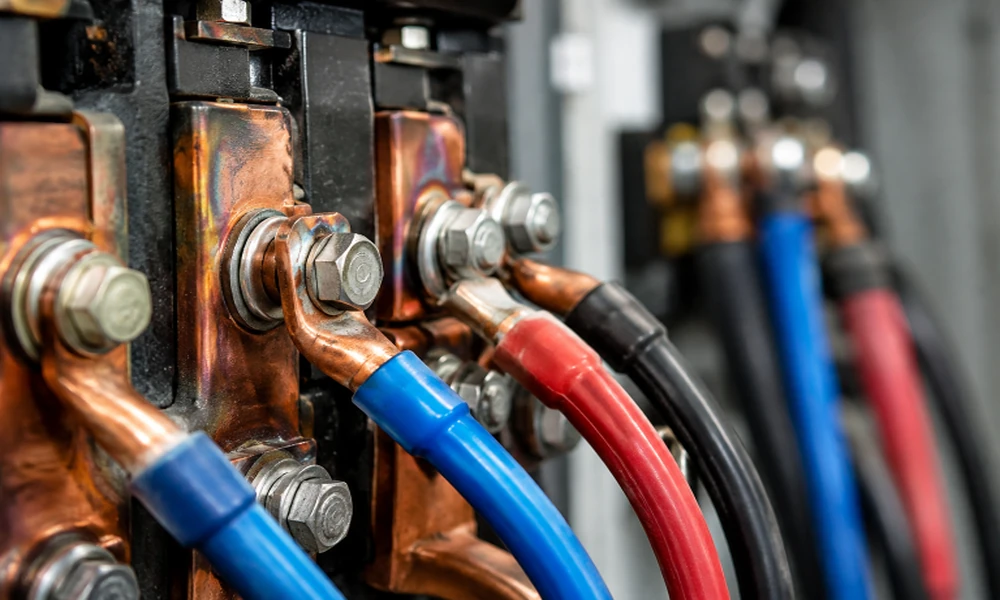
- Cables and terminations: Look for cracked insulation, poor routing, abrasion, exposed conductors, corrosion, or loose connections.
- Grounding and bonding: Confirm that pathways are present, accessible, and accurately reflected in the available drawings.
Review Safety Controls And Work Practices
Safety planning begins before any cover is opened or service work starts. Identify all energy sources, locate the disconnecting means, verify the labels, and determine who is authorized to perform the work. Lockout and tagout procedures safeguard workers from hazardous energy by requiring equipment to be isolated and controlled during covered servicing and maintenance activities.
- Identify electrical, mechanical, hydraulic, pneumatic, thermal, and stored energy where applicable.
- Confirm that disconnects and equipment identifiers are clear and legible.
- Review barriers, guards, access restrictions, and hazard labels before beginning work.
- Document hazards found and assign responsibility for corrective action.
Facilities should also maintain an electrical safety program appropriate to their work. The NFPA 70E electrical safety framework addresses hazards such as shock, arc flash, and arc blast in workplace electrical activities.
Use Condition-Based Maintenance
Not every asset needs the same maintenance interval. A lightly loaded panel in a clean, conditioned room may present different concerns than heavily used equipment exposed to heat, dust, moisture, or process contamination. Condition-based maintenance uses observations and test results to guide service decisions.
- Reactive maintenance: Repair after failure.
- Preventive maintenance: Service at planned intervals.
- Predictive maintenance: Use trends and measurements to find developing problems.
- Condition-based maintenance: Adjust priorities based on equipment health, environment, and operational importance.
Infrared scans, insulation testing, power-quality monitoring, vibration checks, and visual inspections can support a maintenance plan. Results should be interpreted by qualified personnel and compared with prior readings, equipment history, and manufacturer instructions.
Check Records, Labels, And Drawings
Accurate documentation helps personnel work faster and more safely, particularly when repairs are urgent. Review nameplates, one-line diagrams, wiring drawings, protection settings, inspection reports, repair history, replacement-part information, and service instructions. Update documents after equipment changes, testing, or modifications so the next person is not relying on obsolete information.
Plan For Future Capacity
Electrical planning should address more than today’s demand. Ask whether production may expand, whether additional motors or feeders are expected, and whether equipment can be accessed safely after installation. Selecting the largest possible option is not automatically the best answer. The practical choice balances present load, realistic growth, available space, efficiency, maintainability, and total project requirements.
Common Questions About Electrical Equipment Checks
How Often Should Electrical Equipment Be Inspected?
Frequency depends on equipment type, operating environment, loading, criticality, condition, manufacturer guidance, and applicable safety requirements. High-use or high-risk equipment may require closer attention than lower-risk assets.
What Conditions Need Prompt Attention?
Burning odors, smoke, repeated breaker trips, hot spots, discoloration, unusual buzzing, water intrusion, damaged insulation, loose covers, and exposed conductors all warrant prompt evaluation. Do not treat these signs as ordinary wear.
When Is Replacement Worth Considering?
Consider safety, repair history, downtime exposure, parts availability, compatibility, operating needs, efficiency, and the cost of maintaining the asset over its remaining service life. A documented evaluation is more useful than deciding from age alone.
Conclusion
Correct sizing, safe work practices, clear records, regular observations, qualified testing, and realistic capacity planning support a dependable electrical system. For Houston facilities, a consistent checklist can help teams identify problems earlier and make better-informed maintenance decisions before critical operations are affected.
