

Hard Water at Home in Salt Lake City, Utah: Signs, Effects, and Practical FixesKey Takeaways
- Hard water contains dissolved calcium and magnesium that can cause scale, spots on dishes, and residue on fixtures.
- Mineral buildup can affect plumbing fixtures, water-using appliances, cleaning, and laundry.
- Testing water hardness helps homeowners determine whether treatment is necessary.
- Conventional ion-exchange softeners reduce hardness minerals, while many filters and salt-free conditioners do not remove them.
- Choosing a treatment system requires comparing water use, installation needs, maintenance, operating costs, and household priorities.
- Hardness testing does not identify every water-quality concern, so suspected contaminants may require separate testing.
White marks on faucets, spotted glasses, stiff towels, and a showerhead that loses spray pressure can all make daily cleaning feel harder than it should. These are familiar concerns in Salt Lake City, where water chemistry can vary by neighborhood, season, source water, and whether a home uses municipal water or a private well.
Before buying equipment, it helps to identify what is actually happening at your tap. Homeowners considering water softener installation in Salt Lake City can start with a hardness test, then compare treatment options based on their household’s water use, plumbing, and goals.
Table of Contents
- What Is Hard Water?
- Common Signs Around the House
- What Hard Water Can Affect
- Health Facts and Misunderstandings
- How to Test Water Hardness
- Treatment Options to Consider
- Choosing a Solution
- Maintenance Tips
- Hard Water Questions Answered
What Is Hard Water?
Hard water contains dissolved minerals, primarily calcium and magnesium. As water moves through soil and rock, it can dissolve naturally occurring minerals before reaching a reservoir, well, or household plumbing system. The amount present is called water hardness.
The dissolved calcium and magnesium in water are commonly measured in milligrams per liter as calcium carbonate or in grains per gallon. General guidance classifies water below 60 milligrams per liter as soft, 61 to 120 milligrams per liter as moderately hard, 121 to 180 milligrams per liter as hard, and above 180 milligrams per liter as very hard.
Common Signs Around the House
Hard water rarely announces itself with a single major failure. More often, Salt Lake City homeowners notice a pattern of recurring cleaning and maintenance issues, including:
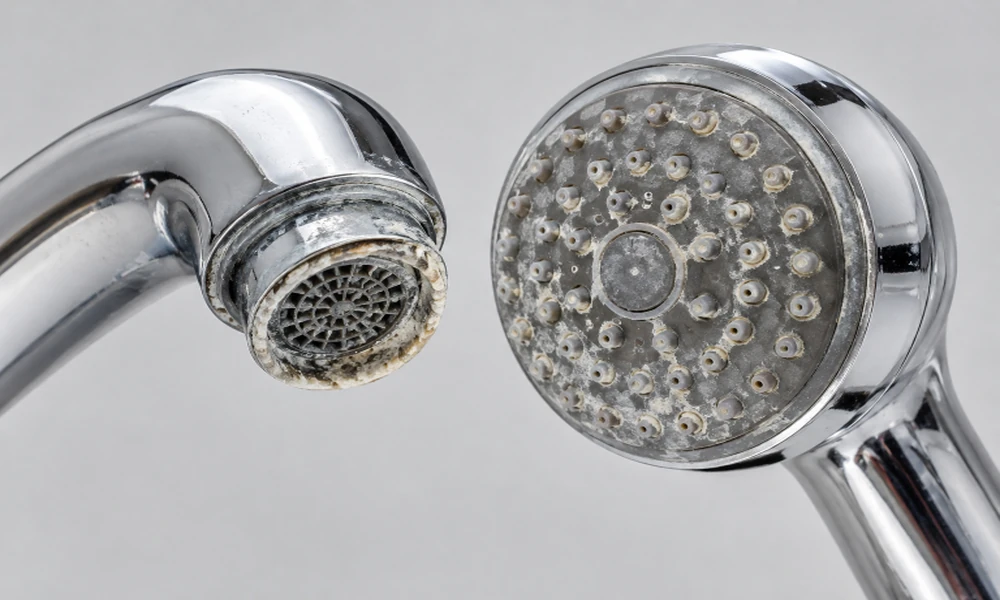
- Chalky white crust around faucets, drains, and shower doors.
- Cloudy spots or film on dishes and glassware after washing.
- Soap that seems slow to lather and soap scum that returns quickly.
- Dry-feeling skin, dull-looking hair, or stiff towels after laundering.
- Reduced water flow through faucet aerators or showerheads.
- Mineral rings inside kettles, coffee makers, humidifiers, and pet-water bowls.
What Hard Water Can Affect
Plumbing Fixtures
Mineral deposits can collect in narrow fixture openings, especially aerators and showerhead nozzles. Cleaning may temporarily restore flow, but rapid buildup can indicate that mineral-rich water is repeatedly passing through the fixture.
Water-Using Appliances
Heating water encourages minerals to form solid deposits, often called scale. Water heaters, dishwashers, washing machines, coffee makers, and humidifiers may require more frequent descaling in a hard-water home. Hardness is not the only possible reason an appliance performs poorly, so testing is a better first step than assuming the cause.
Cleaning and Laundry
Calcium and magnesium can interfere with the performance of soap and detergent. That can leave residue on dishes and fabrics, while also making it tempting to use more cleaning product than necessary. Following detergent instructions, using rinse aid when appropriate, and cleaning fixtures regularly can reduce the visible effects.
Health Facts and Common Misunderstandings
Hardness is generally a household nuisance rather than a health hazard. It should not be confused with contaminants such as bacteria, lead, nitrate, or PFAS, which require separate testing and, when needed, specific treatment methods. A softener is not a replacement for a complete drinking-water evaluation when a water-quality concern exists.
Ion-exchange softeners exchange hardness minerals for sodium or potassium. People following sodium-restricted diets should discuss their drinking-water choices with a qualified health professional. A separate unsoftened drinking-water tap may be appropriate in some homes. Guidance on how home softening can add sodium to water also notes that potassium chloride is an alternative regeneration material.
How to Test Water Hardness
Start With Available Records
Review your local water provider’s annual water-quality report and any past well-test records. These are useful starting points, but they do not always reflect the exact conditions inside one home, especially after water travels through a neighborhood’s pipes and household plumbing.
Use a Home Test Kit
Test strips and drop-count kits can provide a practical estimate of hardness. Test untreated cold water when possible, follow the kit instructions closely, and repeat the test if the result seems inconsistent with visible scale or changing water conditions.
Choose Laboratory Testing When Needed
Consider certified laboratory testing if the water has an unusual odor, color, or taste, or contains visible particles, or if the home relies on a private well. A hardness test measures minerals, not every potential water-quality concern.
Treatment Options to Consider
Routine Cleaning
For light scale, use a cleaner approved for the affected surface and follow appliance instructions. Mild acidic products may loosen mineral buildup, but abrasive pads can scratch chrome, glass, stone, and some finishes.
Point-of-Use Filters and Conditioners
Faucet-mounted and under-sink filters may improve taste or reduce selected contaminants at one tap, but many do not remove hardness. Salt-free conditioners are generally intended to reduce scale behavior rather than remove calcium and magnesium from the water.
Ion-Exchange Water Softeners
A conventional softener uses resin to exchange calcium and magnesium ions for sodium or potassium ions. It periodically regenerates with a brine solution and requires salt or potassium chloride, a drain connection, and ongoing maintenance. This option is designed for whole-home mineral reduction, rather than treatment at a single faucet.
How to Choose the Right Solution
- Test first and record the hardness result.
- Identify whether the main concern is scale, cleaning, appliance care, taste, or a separate contaminant.
- Consider household size, daily water use, and the fixtures most affected.
- Compare installation requirements, maintenance, salt use, wastewater, and operating costs.
- Check product certifications, warranty terms, bypass options, and service instructions.
Cleaning and Maintenance Tips
- Clean aerators and showerheads before deposits become difficult to remove.
- Maintain water heaters, coffee makers, and humidifiers according to manufacturer instructions.
- Check a softener’s salt level and watch for hardened salt bridges.
- Keep records of test results, filter changes, and service visits.
- Investigate sudden changes in pressure, taste, odor, or water appearance.
Hard Water Questions Answered
Is hard water safe to drink?
Hardness itself is generally a mineral issue. If you are concerned about other contaminants, test specifically for those concerns rather than relying on a hardness result.
Can hard water damage pipes?
Scale can accumulate over time and restrict smaller openings. Pipe age, material, water chemistry, and flow patterns also affect how a plumbing system performs.
Does a shower filter remove hardness?
Most shower filters are not whole-home softeners and may not remove the calcium and magnesium responsible for hardness.
Is a water softener needed in every Salt Lake City home?
No. The right choice depends on tested hardness, household priorities, appliance concerns, and the water conditions at that specific property. Evidence, rather than guesswork, is the clearest path to a practical solution.
Conclusion
Hard water can turn everyday tasks into recurring frustrations, from scrubbing mineral deposits to dealing with spotted dishes and scale-prone appliances. The good news is that homeowners do not have to guess at the solution. By testing water hardness, understanding the difference between softeners and filters, and choosing treatment that fits their household’s needs, Salt Lake City residents can make more informed decisions about their water. The smartest approach starts with knowing what is in your water, then investing in a solution that protects your plumbing, simplifies daily routines, and delivers lasting value.
