

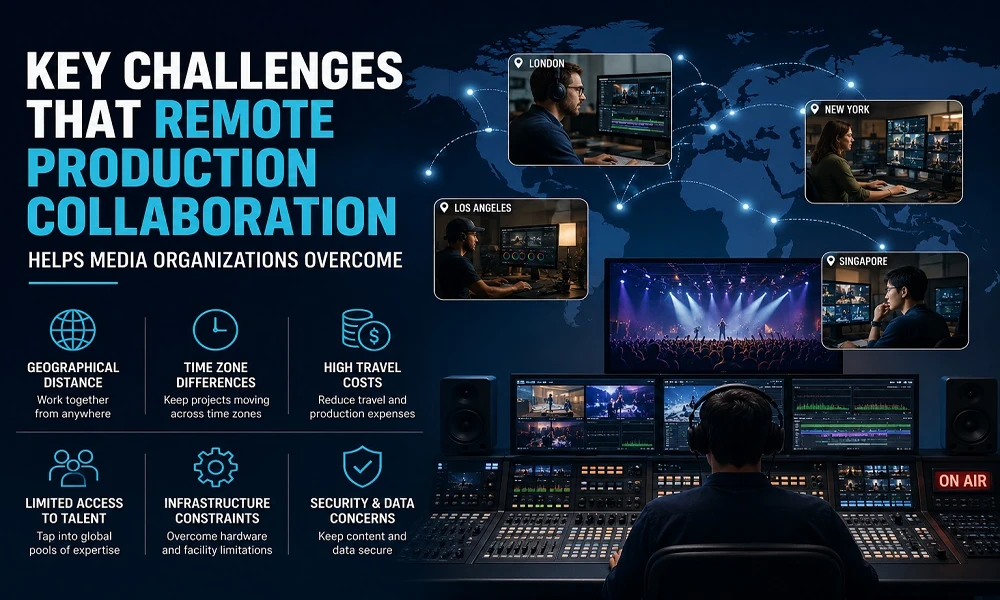
Media production has become increasingly complex, fast-paced, and geographically distributed. Whether creating films, television programmes, commercials, podcasts, digital marketing content, live events, educational materials, or streaming productions, organisations often rely on contributors working from different locations. Editors, producers, directors, designers, audio specialists, visual effects artists, writers, and project managers may all participate in the same project without ever sharing a physical workspace. As a result, remote production collaboration has become a critical component of modern media workflows.
The shift toward distributed production models has created new opportunities for flexibility and access to talent, but it has also introduced significant operational challenges. Coordinating creative work across multiple locations requires more than simply providing internet access and communication tools. Media organisations must address issues related to communication, workflow management, file access, project visibility, feedback coordination, and team alignment. Remote production collaboration helps overcome these challenges by providing structured processes and technologies that support effective teamwork regardless of location.
One of the most common challenges in media production is communication. Creative projects often involve continuous discussions regarding storytelling, visual style, technical requirements, deadlines, and client expectations. In traditional office environments, many of these conversations occur naturally through face-to-face interactions. When teams are distributed, maintaining the same level of communication can become more difficult.
Remote production collaboration creates communication pathways that allow team members to remain connected throughout the production process. Through shared workspaces, virtual meetings, messaging tools, and collaborative review systems, contributors can exchange information more effectively and reduce the risk of misunderstandings.
Miscommunication can have significant consequences in media production. A misunderstanding regarding creative direction, technical specifications, or client requirements may lead to revisions, delays, and increased costs. By improving communication structures, remote collaboration helps reduce these risks and supports smoother project execution.
Maintaining creative alignment is another major challenge. Media projects often depend on a shared creative vision that guides decisions throughout production. Directors, producers, editors, designers, and other contributors need a common understanding of project goals, audience expectations, and stylistic direction.
When teams work remotely, maintaining this alignment requires deliberate effort. Remote production collaboration supports consistency by providing shared access to creative briefs, reference materials, project documentation, and review processes. This visibility helps ensure that all contributors are working toward the same objectives.
Project visibility presents another challenge for distributed teams. Media projects frequently involve multiple tasks occurring simultaneously across different departments and production stages. Without clear visibility into project status, team members may struggle to understand priorities, dependencies, or upcoming deadlines.
Remote production collaboration helps centralise project information and provide greater transparency. Contributors can monitor progress, review updates, and identify potential bottlenecks more easily. Improved visibility supports better planning and helps teams stay coordinated throughout the production lifecycle.
File management is one of the most significant operational challenges facing modern media organisations. Video files, audio recordings, graphics, visual effects assets, project files, and supporting documentation can consume large amounts of storage and require frequent sharing among team members.
Managing these assets across distributed teams can be difficult without effective collaboration systems. Remote production collaboration solutions help organise and distribute files while ensuring that team members can access the resources they need. This centralisation reduces confusion and improves workflow efficiency.
Version control is closely related to file management. Creative projects often undergo numerous revisions before final approval. Editors may create multiple cuts, designers may develop various concepts, and stakeholders may request repeated adjustments.
Without structured processes, team members may accidentally work from outdated versions or review incorrect files. Remote production collaboration helps maintain version control by providing organised workflows and clear records of revisions. This structure reduces errors and supports more efficient review cycles.
Feedback management is another area where distributed production teams often encounter challenges. Creative work depends heavily on feedback from clients, stakeholders, producers, and creative leaders. However, feedback delivered through scattered emails, messages, or informal conversations can become difficult to track.
Remote production collaboration systems help centralise feedback and connect comments directly to relevant project assets. Contributors can review feedback in context, understand revision priorities, and maintain a clear record of decisions throughout the project. This clarity reduces confusion and helps ensure that revisions are implemented accurately.
Scheduling coordination also becomes more complex when teams operate across different locations and time zones. Meetings, reviews, approvals, and production milestones must be coordinated despite varying schedules and working hours.
Remote production collaboration supports scheduling by providing shared calendars, project timelines, and communication tools that help teams coordinate activities more effectively. These capabilities reduce scheduling conflicts and help maintain project momentum.
Access to specialised talent is one of the advantages of distributed production, but it also introduces coordination challenges. Media organisations increasingly work with freelancers, contractors, consultants, and specialists located around the world. While this approach expands access to expertise, it can create communication and workflow complexities.
Remote production collaboration helps integrate external contributors into project workflows more effectively. Shared systems and standardised processes ensure that all participants have access to the information and resources needed to contribute successfully.
Quality control becomes particularly important when projects involve numerous contributors. Different editors, designers, audio engineers, and visual effects artists may work on various components of the same production. Without effective collaboration, inconsistencies may emerge in visual style, audio quality, branding, or storytelling.
Remote production collaboration helps maintain quality standards by creating opportunities for review, communication, and alignment throughout production. Teams can evaluate work more consistently and ensure that all elements contribute to a cohesive final product.
Client communication represents another challenge that collaboration tools help address. Clients often expect regular updates, review opportunities, and visibility into project progress. Providing this information manually can consume significant time and resources.
Remote production collaboration platforms allow organisations to share updates, collect feedback, and facilitate approvals more efficiently. This transparency strengthens client relationships while reducing administrative workloads.
Security is another growing concern in media production. Projects frequently involve confidential materials, intellectual property, unreleased content, and sensitive business information. Distributed workflows can increase exposure if files and communications are not managed appropriately.
Remote production collaboration solutions often include security features that help protect project assets while allowing authorised contributors to access necessary information. These safeguards support secure collaboration without limiting productivity.
Scalability presents additional challenges for growing media organisations. As project volumes increase and teams expand, informal communication methods may become difficult to manage. Processes that work effectively for a small production team may not support larger operations.
Remote production collaboration provides scalable frameworks that help organisations manage increasing complexity while maintaining consistency and efficiency. Structured workflows support growth without requiring fundamental changes to production processes.
Operational resilience has become another important consideration. Unexpected disruptions, travel limitations, weather events, and other external factors can affect traditional production models. Distributed collaboration capabilities help organisations maintain continuity by allowing work to continue regardless of physical location constraints.
This flexibility enables media organisations to adapt more effectively to changing circumstances while protecting project schedules and client commitments.
As content demand continues to increase across entertainment, marketing, education, and digital media sectors, organisations are under growing pressure to deliver high-quality work efficiently. Remote production collaboration helps address many of the operational and creative challenges associated with modern media workflows.
By improving communication, enhancing project visibility, streamlining feedback management, supporting file access, maintaining creative alignment, and enabling distributed teamwork, remote production collaboration provides practical solutions to complex production challenges.
The result is a more connected and efficient production environment where teams can collaborate effectively regardless of location. For media organisations navigating increasingly complex projects and distributed workforces, remote production collaboration has become an essential tool for overcoming challenges and achieving successful outcomes.
