

Key Takeaways
- Routine cleaning can make leaks, tire damage, cracked lights, and worn wipers easier to notice.
- Your owner’s manual is the best source for vehicle-specific fluid, service, and cleaning guidance.
- Tires, glass, lights, fluids, and wipers deserve regular attention because they affect everyday driving safety.
- Cleaning products should match the material being treated to avoid discoloration, scratches, or surface damage.
- A short monthly inspection can help identify concerns before they become more disruptive repairs.
Keeping a vehicle clean is about more than appearance. Washing away road grime, brake dust, salt, and interior clutter creates a better opportunity to inspect the parts drivers rely on every day. A practical routine combines basic cleaning with simple checks for changes in tire condition, fluids, lights, glass, and cabin equipment. For businesses developing maintenance-minded vehicle care solutions, a private label automotive products manufacturer can support product categories designed for specific surfaces and routine applications. For drivers, the important point is simpler: use the right product carefully, follow its directions, and never treat cleaning as a substitute for mechanical service.
Why Routine Care Matters
Vehicles operate in heat, rain, dust, traffic, and changing road conditions. Dirt can conceal a cracked lens, a loose trim piece, uneven tire wear, or a fresh spot beneath the vehicle. A clean exterior and organized cabin make changes easier to spot. Maintenance needs still vary by model, mileage, climate, load, and driving style, so scheduled service should always follow the owner’s manual.
How Cleaning And Maintenance Work Together
Cleaning does not diagnose a brake problem or replace an oil change, but it supports better observation. Clean wheels may reveal unusual residue, while clean windows, mirrors, lights, and camera lenses improve the driver’s view and help others see the vehicle. Avoid directing high-pressure water at sensitive under-hood electrical components unless the vehicle manufacturer specifically permits that method.
A Simple Monthly Vehicle Checklist
Set aside 15 to 20 minutes each month for a walk-around and basic inspection. Park on level ground, keep the vehicle off when checking items that require it to be off, and use the manual for model-specific instructions.
- Look for fresh fluid spots, damaged trim, cracks, or new body damage.
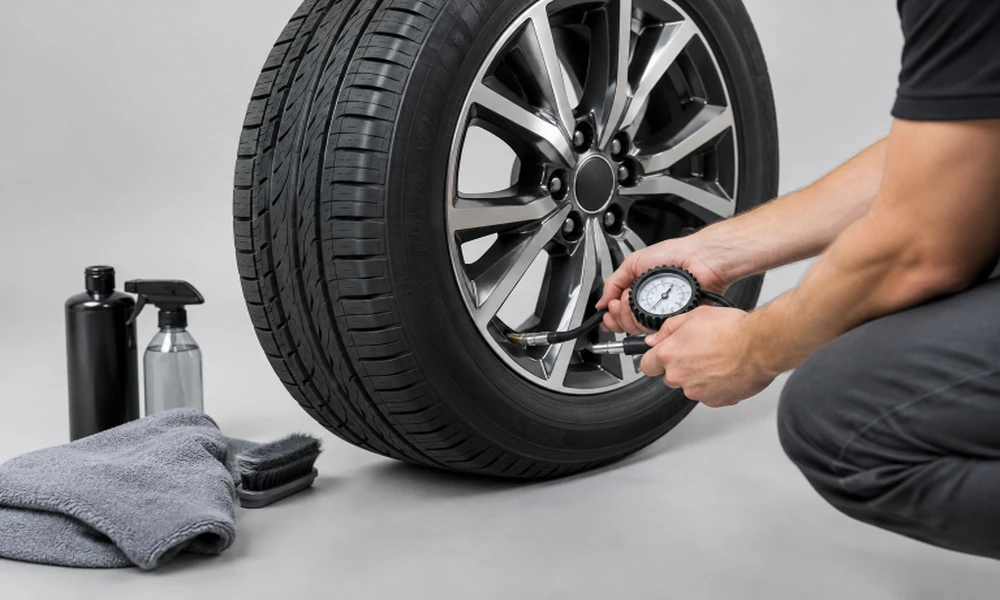
- Check cold tire pressure, tread, sidewalls, and the spare tire if equipped.
- Test headlights, brake lights, turn signals, hazard lights, and wipers.
- Clean the windshield, mirrors, exterior cameras, lights, and license plates.
- Check applicable fluid reservoirs and remove trash from the cabin.
- Confirm that emergency supplies, registration documents, and a tire gauge are accessible.
Tires And Wheels
Tires deserve priority because they are the vehicle’s contact points with the road. Use the recommended pressure on the driver-side door label or in the owner’s manual, rather than the maximum pressure molded into the tire sidewall. Check pressure when the tires are cold, inspect for cuts, bulges, punctures, cracks, and irregular wear, and schedule service if the vehicle pulls, shakes, or repeatedly loses air. NHTSA tire safety guidance advises checking pressure monthly, including the spare when applicable, and states that tires should be replaced when tread reaches 2/32 of an inch. Wheel rotation, balancing, and alignment should follow the manufacturer’s recommendations or be addressed sooner when uneven wear or vibration appears.
Fluids And Leaks
Engine oil lubricates internal engine components, coolant helps regulate engine temperature, brake fluid supports hydraulic braking, and washer fluid helps preserve visibility. Other fluids, including transmission and power steering fluids, depend on the vehicle’s design. Check levels only as directed by the manual, and never open a hot cooling system. Leak color can offer a clue, but it cannot reliably identify a fluid without further inspection. Used oil and other automotive fluids should never be poured onto the ground, into drains, or into household trash. Proper handling and recycling of used oil help prevent contamination and direct drivers to appropriate collection options.
Windows, Lights, And Visibility
Clean both sides of the windshield, then wipe mirrors and camera lenses with a clean microfiber towel. Interior glass can develop haze that becomes distracting in bright sun or at night. Replace wiper blades when they streak, chatter, skip, or leave areas uncleared. Inspect headlight housings for cracks, clouding, or moisture, and keep reflectors and license plates free of heavy dirt.
Interior Care And Cabin Comfort
Vacuum seats, carpet, mats, and crevices regularly to remove grit that can wear fabrics and surfaces. Match cleaners to leather, fabric, vinyl, plastic, rubber, or glass, and test a small hidden area first. Do not soak switches, screens, vents, or seat controls. For touchscreens and electronic displays, follow the manufacturer’s recommended cleaning method. Remove wet clothing, floor mats, and spills promptly to limit odors and moisture buildup.
Seasonal Preparation
Spring And Summer
After winter driving, rinse accumulated salt and grime from wheel wells and the underbody when practical. Before hot weather and long trips, inspect the tires, check the coolant level according to the manual, and test the air conditioning early enough to arrange service if needed.
Fall And Winter
Replace worn wipers before heavy rain or snow, use washer fluid suited to expected temperatures, and keep lights and windows clean during darker months. A basic emergency kit can include gloves, a flashlight, water, a phone charger, a tire gauge, and weather-appropriate supplies.
Choosing Cleaning Products
Read every label before use. Match the cleaner to the surface, follow dilution and ventilation instructions, and use clean microfiber towels or soft brushes to reduce the chance of scratching. Never mix chemicals unless the manufacturer specifically instructs you to do so. Store products away from children, pets, excessive heat, and ignition sources.
When To Call A Professional
Arrange prompt service for a warning light that remains on, a strong fuel smell, a major fluid leak, overheating, brake changes, repeated tire-pressure loss, new grinding noises, or electrical components that work intermittently. A bulging tire, exposed tire cords, a soft brake pedal, or a sudden change in handling should not be ignored.
Common Car Care Mistakes
- Using household cleaners without confirming they are safe for automotive materials.
- Cleaning hot paint or glass, which can lead to rapid drying and stubborn spotting.
- Using dirty towels that drag grit across painted surfaces.
- Checking tire pressure immediately after driving instead of when tires are cold.
- Adding the wrong fluid or overfilling a reservoir.
- Ignoring warning lights, unusual smells, noises, or changes in handling.
Final Checklist
Clean glass, mirrors, lights, and camera lenses to maintain clear visibility and help driver-assistance systems function as intended. Inspect tires for uneven wear, cracks, embedded objects, or other visible damage, and check cold tire pressure against the vehicle manufacturer’s recommended specifications. Look for fluid leaks beneath the vehicle, check applicable fluid levels, and test headlights, brake lights, turn signals, and windshield wipers. Clear unnecessary cabin clutter so it does not obstruct the pedals, controls, or the driver’s view, and ensure essential items are stored securely. Review the owner’s manual for upcoming maintenance, scheduled inspections, and any dashboard warnings that may need attention. It is also helpful to keep track of tire rotations, oil changes, battery checks, and other routine service so maintenance is not delayed or forgotten. If you notice unusual noises, vibrations, warning lights, or changes in handling, arrange a professional inspection rather than assuming the issue will resolve itself. A consistent routine keeps small observations from being overlooked, helps identify developing problems earlier, and makes every drive better prepared. By combining simple pre-drive checks with regularly scheduled maintenance, drivers can support safer vehicle operation, reduce avoidable wear, and enjoy greater confidence on the road.
